State of Iindigenous Peoples of India 2011
AITPN has been contributing the "India" chapter in the IWGIA's yearbook, The Indigenous World, for the last a few years. The Indigenous World 2011's India chapter provides a comprehensive state of affairs of the indigenous peoples of India during 2010. The issues included are legal rights and policy developments; human rights violations by both the security forces and the Armed Opposition Groups; violence against indigenous women and children; denial of the fundamental right to education; alienation of tribal land; the conditions of the tribal IDPs including displacement-induced and conflict induced IDPs; repression under forest laws; non-implementation of reservation in employment; and non-utilization and mis-utilization of tribal funds.
Read India chapter in The Indigenous World 2011
19 tribal families paid compensation
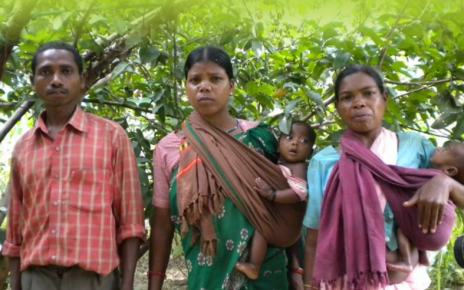
On 24 November 2009, AITPN filed a complaint (No.PC/2/2009/STGTR/DEKAAL/RU-II) with the National Commission for Scheduled Tribes (NCST) against denial of compensation to 19 tribal families whose lands were acquired for construction of a jail road at Kanchanpur, North Tripura. On 22 March 2010, the Tripura state government informed the NCST that the Land Acquisition Collector, North Tripura started to make the payment to the affected families which was likely to be completed by 31 March 2010. On 4 April 2011, the NCST asked the AITPN to provide the names of tribal victims who have not received the compensation for verification by the Commission. The list was provided on 11 April 2011. Subsequently, AITPN has been informed by the affected families that compensation has been received by them.
UPR: The Experience of Bangladesh
During the UPR examination in February 2009, Bangladesh accepted 34 out of 42 recommendations made. The government of Bangladesh also promised to fully implement the CHT Peace Accord of 1997 “within the shortest possible time within the framework of the Constitution of Bangladesh”. AITPN has played a critical role and made its its submission. In this publication, AITPN shares its experiences to monitor implementation of the recommendations made to the government of Bangladesh.
Needed: Parliamentary scrutiny of NIIPs
Across the world sectoral Commissions such as the ones on Tribal/Indigenous Peoples have been established; but these often lack autonomy, adequate resources and powers provided in the Paris Principles on National Human Rights Institutions. In a significant step in the right direction, India’s Parliamentary Standing Committee on the Welfare of Scheduled Castes and Scheduled Tribes evaluated the mandate, powers and working of the National Commission for Scheduled Tribes. This issue of IRQ also covers a range of issues.
The State of India's Indigenous and Tribal Peoples 2009
"The State of India’s Indigenous and Tribal Peoples 2009" covering the events of 2008 is the third issue of the series. The report covers wide range of issues such as violations of the rights of the indigenous peoples by the security forces and the non-tribals, indigenous peoples and armed conflict, violations of the international humanitarian law by the armed opposition groups, violence against indigenous women and children, alienation of indigenous peoples’ land, displacement of indigenous/tribal peoples, repression under forest laws, failure of affirmative action programmes and state of the National Commission for Scheduled Tribes, among others. As the editorial of this report shows, the National Human Rights Institutions, despite their various shortcomings, can be effective if effective interventions from the civil society organizations or individuals are made.
AITPN Impact: India's Home Secretary Summoned
On 25 June 2002, AITPN had filed a complainant with the National Human Rights Commission (NHRC) of India pertaining to the death of Rathajoy Reang, an indigenous person, as a result of torture in the custody of the Assam Rifles – a para-military group. A First Information Report No. 71/2003 was registered. After more than six years, on 20th August 2008, the NHRC directed the Ministry of Home Affairs, Government of India to expedite the consideration of granting sanction for prosecution of Major S. S. Dhanda and Nursing Assistant A.K. Sahu who were found guilty of killing Mr Reang after an investigation by the Criminal Investigation Department of the State Government of Tripura. The Home Ministry refused to give sanction. Therefore, the NHRC summoned the Secretary, Ministry of Home Affairs, Government of India to appear in person on 4th February 2009 if the decision on the matter of sanction was not communicated to the Commission, on or before 28th January, 2009. AITPN awaits further action of the NHRC on the issue.
In another case with regard to the torture of Mr Hemanta Kumar Ningombam, a reporter on 18 January 2003, NHRC issued notice under section 18(a)(i) of Protection of Human Rights Act, 1993 to Chief Secretary, Government of Manipur on 20 October 2008 as to why compensation be not recommended to be awarded to Mr Kumar. Earlier on 13 March 2003, the government of Manipur informed that five Indian Reserve Battallion personnel were suspended for the torture.
Displaced Children Have Rights Too - National Commission for Protection of Child Rights, October 2008
In its latest issue of the newsletter, infocus, India's National Commission for Protection of Child Rights makes appropriate recommendations to improve the conditions of the internally displaced children including the indigenous Brus sheltered in Tripura State of India. The NCPCR visited the camps of indigenous Bru Internally Displaced Persons in Tripura State of India on 8-9 September 2008 following a complaint of AITPN on 17 June 2008 against the non-inclusion of 7,204 Bru children since 2003.
UPR and Indigenous Peoples of Asia
AITPN has been in the forefront of making Asian indigenous peoples' submissions for inclusion into the 10 page stakeholders' summary prepared by the OHCHR. AITPN in association with a number of indigenous organisations made the stakeholders' submission on Malaysia and Bangladesh which are scheduled to be examined at the forthcoming fourth session of the Working Group on the Universal Periodic Review of the UN Human Rights Council (2 - 13 February 2009).
Bangladesh: "We want the lands, not the indigenous peoples",
1 September 2008
India (National Report of the government)
Indonesia (National Report of the government)
Philippines(National Report of the government)